
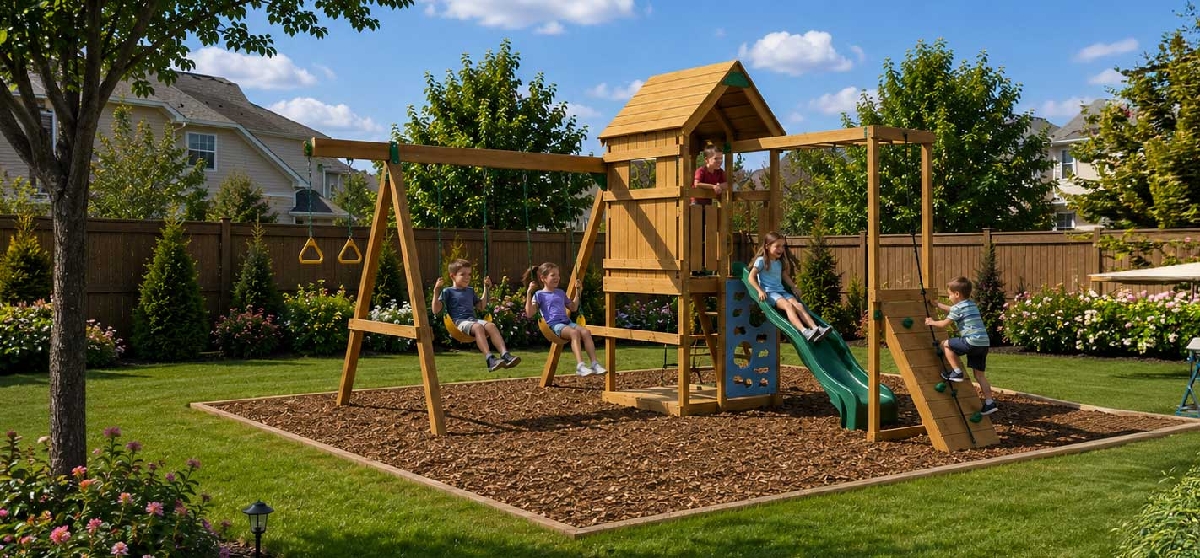
Start Here: It’s Bigger Than You Think
Most families make the same mistake when planning a backyard playset. They find a playset they love first, then try to figure out how to squeeze it into their yard afterward.
That’s usually when problems start. A playset may technically fit, but still leave the backyard feeling cramped, awkward, or difficult to use safely.
The better approach is to start with your space first. Once you understand how much room you actually have available, it becomes much easier to choose the right size, layout, and features for your family.
Start with your space, not the playset.
The Biggest Misunderstanding: Footprint vs. Total Space
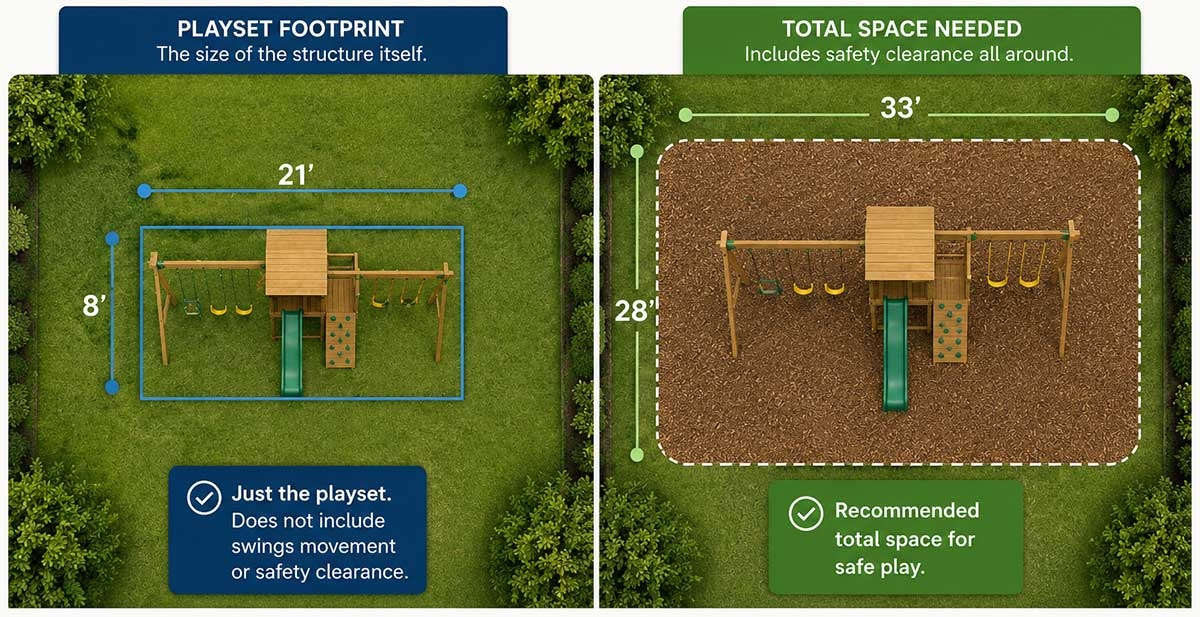
One of the most common mistakes families make is confusing a playset’s footprint with the actual space required to use it safely.
The listed dimensions usually only describe the structure itself. What really matters is the total area needed once you include swing movement, safety clearance, and space for kids to move around comfortably.
For example, a smaller playset might only measure around 8 by 21 feet, but the recommended space for safe use can be much closer to 28 by 33 feet. Larger playsets can require even more room once clearance areas are added.
This is where many backyards start to feel crowded after installation. If you only plan for the structure itself, there often isn’t enough room for swings to move safely, kids to run and play around the set, or proper safety surfacing throughout the play area.
Every playset is different, which is why it’s important to follow the manufacturer’s recommended safety zone dimensions for the specific model you choose.
The required space is not just about fitting the structure itself. It’s designed to allow proper swing movement, safe clearance around climbing areas, and enough room for safety surfacing throughout the play area.
Before purchasing, always review the recommended total space requirements for the playset, not just the footprint dimensions.
Step 1: Measure Your Usable Space (Not Just Your Yard)
Your full yard size doesn’t matter as much as your usable space.
Start by asking:
- How much open, flat area do I actually have?
- What’s already taking up space? (deck, patio, trees, fence)
- Where can’t I install a playset?
You’re looking for a clear, open zone that can handle:
- The playset
- The full safety clearance around it
Step 2: Use These Yard Size Ranges
To simplify things, most yards fall into three categories:
-
Small Yards (700–875 sq ft available)
- Best for compact playsets
- Limited room for large swing extensions
- Still enough space for safe play if planned correctly
-
Medium Yards (875–1,000 sq ft available)
- More flexibility with swings and spacing
- Room for multiple kids to play comfortably
-
Large Yards (1,000+ sq ft available)
- Full-feature playsets
- More activities and room to grow
- Space for running, not just playing on the structure
These ranges give you a starting point, but the real decision comes down to layout.
Step 3: Don’t Just Fit It. Place It Right.
A playset can technically fit in your yard and still end up in the wrong spot.
Before you choose a location, think beyond just measurements. Kids need room to move safely around the playset, not just on it. You’ll want open space around swings, slides, and climbing areas instead of placing the structure too close to fences, trees, decks, or hard surfaces.
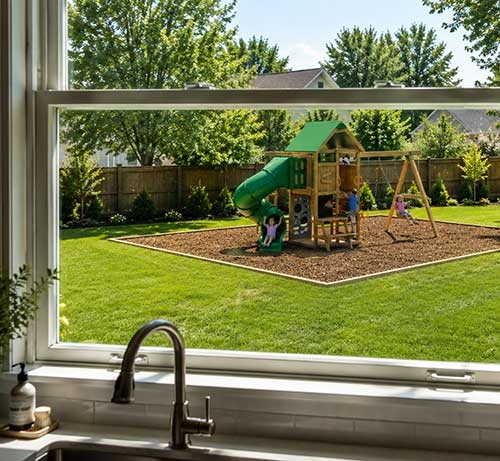
It’s also smart to think about visibility. The best location is usually somewhere you can easily see from the kitchen, patio, or main living areas. When parents can keep an eye on the playset comfortably, kids tend to use it more often and families feel more confident about outdoor play.
And remember, the playset is only part of the activity. Kids run laps around it, chase each other, and turn the entire backyard into part of the experience. If the structure fills the whole yard, the space can start to feel crowded very quickly.
Step 4: Plan for Ground and Conditions
A good playset installation starts with good ground preparation. This is one of the most overlooked parts of the process, and it’s where a lot of long-term problems begin.
Your installation area should be as flat and level as possible with good drainage and enough clearance from roots, large rocks, and other obstacles. Even a small slope can create challenges during installation and affect how the playset sits over time.
If your yard is uneven, you may need to remove sod, level the area, or bring in additional fill dirt before installation begins. Taking the time to prepare the space properly helps prevent issues like uneven structures, standing water, and unnecessary maintenance later on.
Step 5: Don’t Forget Safety Surfacing
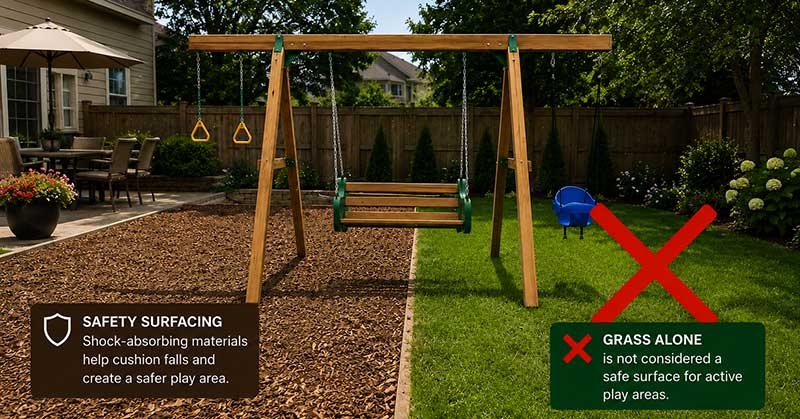
Safety surfacing is one of the most important parts of planning a playset, and it’s something many families underestimate until installation day.
Grass alone is not considered a safe surface for active play areas. A proper shock-absorbing material helps cushion falls and creates a safer environment around swings, slides, and climbing features.
Most backyard wood playsets use materials like mulch, bark, wood chips, sand, or gravel. The recommended depth depends on the material, but many installations require between 9 and 12 inches for proper protection.
It’s also important to remember that the safety surface should extend throughout the entire play area, not just directly under the structure itself. Swings, slides, and running space all need coverage to help keep kids safer during play.
Step 6: Think Long-Term, Not Just Today
One of the most common mistakes families make is planning only for their kids right now instead of thinking a few years ahead.
Children grow quickly, and a playset that feels perfect today should still make sense several years from now. A good setup leaves room for kids to stay engaged as they get older and gives your family flexibility if you want to add accessories or expand the play area later.
That’s why it’s usually smarter to avoid completely filling your yard on day one. Leaving a little extra room can make the backyard feel more open, easier to maintain, and more adaptable over time.
Before choosing a playset, take a step back and think about how the entire space will function long term. Make sure you understand your total usable area, not just the footprint of the structure itself. Consider whether the layout still leaves room for the rest of your yard and whether the surrounding space will be practical to maintain.
If the answer is yes, you’re likely making a much better long-term investment for your family.
Learn More About Backyard Playground Safety Guidelines
Final Thought
The right playset does more than simply fit your yard. It should fit the way your family actually lives, plays, and uses the space every day.
When you start by planning your yard first, the rest of the process becomes much easier. You can choose the right size, pick features that make sense for your kids, and avoid layout mistakes that are difficult to fix later.
A little planning now can help create a backyard your family will enjoy for years to come.
Ready to see what works best for your space? Start exploring playsets designed to fit your yard and your family.
Ready to see what fits your space? Get Help Choosing the Right Fit
Leave your comment